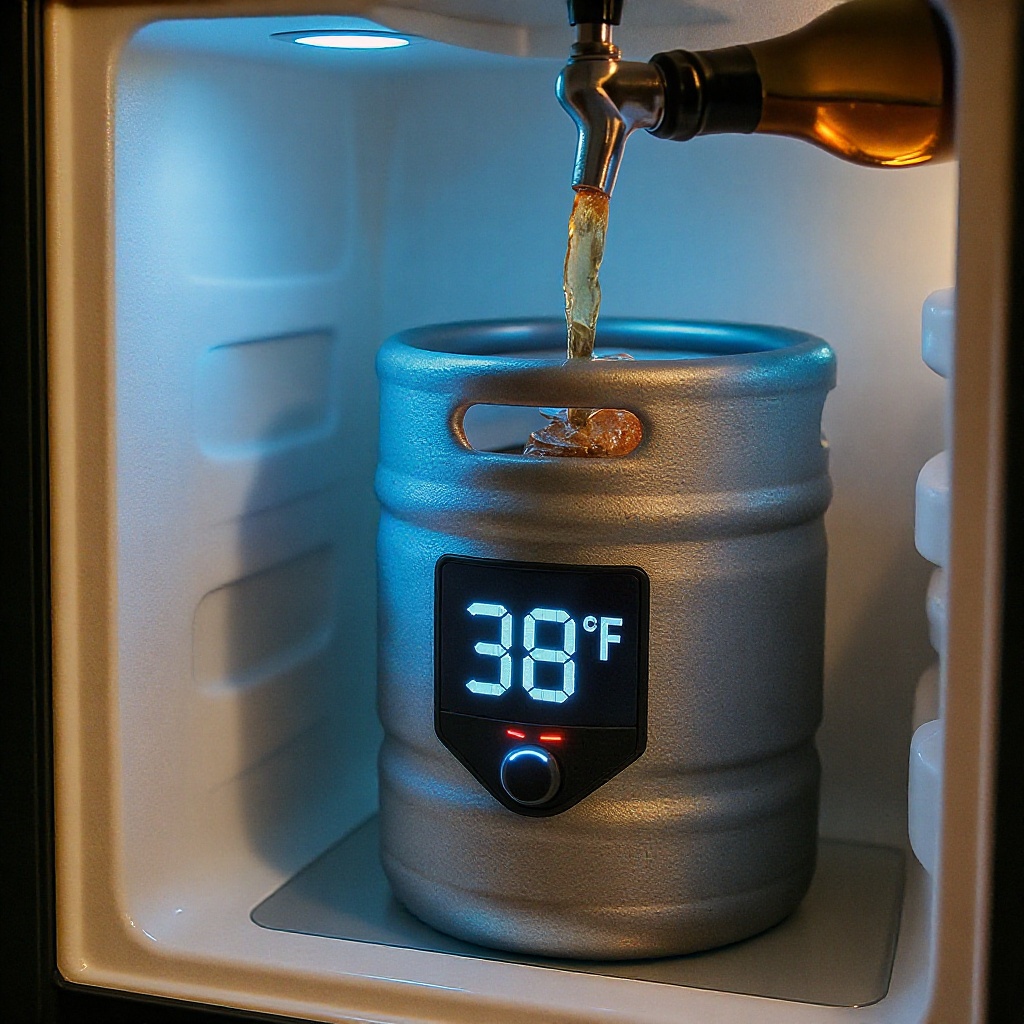
Unopened Kegs: The Baseline
A sealed, unopened mini keg (5 liters) stays fresh for 3–6 months when stored at refrigerator temperature (38°F or below). That's the baseline — and it's the reason breweries that move volume through TapDrop can offer better quality than distributors who warehouse product for months.
The enemy is heat. Every degree above 38°F accelerates oxidation and light-strike degradation. A keg stored at 70°F for two months is technically still drinkable — but it's not going to taste the way the brewer intended. The hop notes will be muted, the malt character will feel stale, and the carbonation will be flat.
Storage rules for unopened kegs:
- Refrigerate or kegerate. A dedicated kegerator or spare fridge is ideal. Room temperature storage is acceptable for up to two weeks — beyond that, quality drops noticeably.
- No direct light. Glass mini kegs are especially light-sensitive. UV exposure produces skunky off-flavors (light-strike). Metal kegs are immune to this but still suffer from heat.
- No freezing. Liquid expansion can damage the pressure valve or crack the vessel.
Tapped Kegs: Where the Math Gets Real
Once you tap, oxygen and CO2 loss start a clock you can't reset. Here's the breakdown by tap type:
| System Type | Freshness Window | Best Use Case |
|---|---|---|
| Pressurized CO2 (kegerator) | 3–4 weeks | Daily drinkers, long-term storage |
| Hand pump (party tap) | 24–48 hours | Single event, one sitting |
| Gravity / no tap | 3–5 days | Finish within 2–3 pours |
Why CO2 changes everything: CO2 pressure does two jobs — it pushes liquid out of the keg AND it fills the space left by liquid as you pour, maintaining carbonation and blocking oxygen. A hand pump pushes air into the headspace. Air contains oxygen, and oxygen oxidizes beer in a matter of hours. After 24 hours with a hand pump, the pours will taste flat and stale. After 48 hours, they're undrinkable.
If you're drinking more than two pours a week from a keg, a CO2 system isn't optional — it's the minimum bar for quality.
Temperature Is the Variable Nobody Talks About
Temperature affects keg freshness in two ways: storage temperature (before tapping) and serving temperature (after). Both matter.
Before tapping: Anything above 65°F for extended periods starts the clock on staling. If a keg sat in a hot mailbox or garage for a summer afternoon, that time counts against the freshness window. TapDrop's cold-chain delivery is specifically designed to avoid this — we don't warehouse inventory that sits in warm conditions.
During serving: The ideal serving range is 38–45°F. Too cold and you lose volatile aroma compounds (especially important for hop-forward styles). Too warm and CO2 stays in gas form rather than dissolving into the beer — the result is a flat, foamy pour even with correct pressure.
A kegerator solves both problems. A mini fridge without a tap system is cold storage, not a draft system. The distinction matters.
Quick rule: Store at 38°F. Serve at 40–45°F. Keep CO2 pressure at 10–12 PSI. If you do those three things, a keg will perform at its best for the full 3–4 week window after tapping.
Signs Your Keg Has Gone Bad
Skunky smell and taste: Light-strike from UV exposure or oxidation. The beer smells like a barn rather than beer. If this happens on a fresh, unopened keg from a reputable supplier, it's a cold-chain failure — contact the source and request a replacement.
Flat pour (no head retention): CO2 loss from an empty tank or a partially connected coupler. Check the CO2 tank (is it open? Is there pressure reading?), check the coupler seal, and check the temperature. If all three are correct and it's still flat, the keg was compromised.
Thick, chunky cloudiness: Normal haze is fine in unfiltered craft styles. Thick, granular cloudiness means fermentation re-started inside the keg — usually because the keg was stored too warm. Don't drink it.
Sour or vinegary taste: Acetobacter (acetic acid bacteria) contamination from oxygen exposure or warm storage. This can't be fixed. Pour it out and order a replacement.
The Subscription Fix: Never Worry About Freshness Again
Here's the real case for TapDrop's monthly subscription model: you stop managing freshness windows entirely.
With a rental kegerator plan ($59/month for the full-size unit), you get a fresh monthly delivery from craft breweries, a CO2-maintained system that keeps the keg fresh for the full 3–4 weeks after tapping, and automatic rotation — by the time you finish one keg, the next one is on its way.
Compare that to buying a keg from a liquor store and guessing at fill dates while storing it in your pantry for weeks. With TapDrop, the freshness problem disappears because the problem is built into the model: we're incentivized to keep inventory moving, and the subscription structure means you never have one keg representing a sunk cost.
If you're an occasional drinker — one or two pours a week from a single keg — you don't need a subscription. A 5-liter mini keg with a countertop tap system is a perfectly reasonable setup. But if you want draft-quality beer at home without thinking about it, the subscription is worth it.
The Short Answer
| Scenario | Freshness Window |
|---|---|
| Unopened, refrigerated (<38°F) | 3–6 months |
| Unopened, room temp (65–75°F) | 4–8 weeks |
| Unopened, hot storage (>85°F) | 2–4 weeks |
| Tapped with CO2 system | 3–4 weeks |
| Tapped with hand pump | 24–48 hours |
| Tapped with gravity / no tap | 3–5 days |
The equipment you use matters more than most buyers realize. If you're buying kegs for anything beyond a single event, a CO2 system is worth the investment.
More from TapDrop
Ready to experience great craft beer at home? TapDrop delivers 5-liter mini kegs from top breweries to your door, anywhere in the US.
Try the Beer of the Month Club →Article last updated: June 2026. Freshness windows are guidelines based on optimal storage. Beer past its best may taste stale but is generally safe to consume if it smells and pours normally.