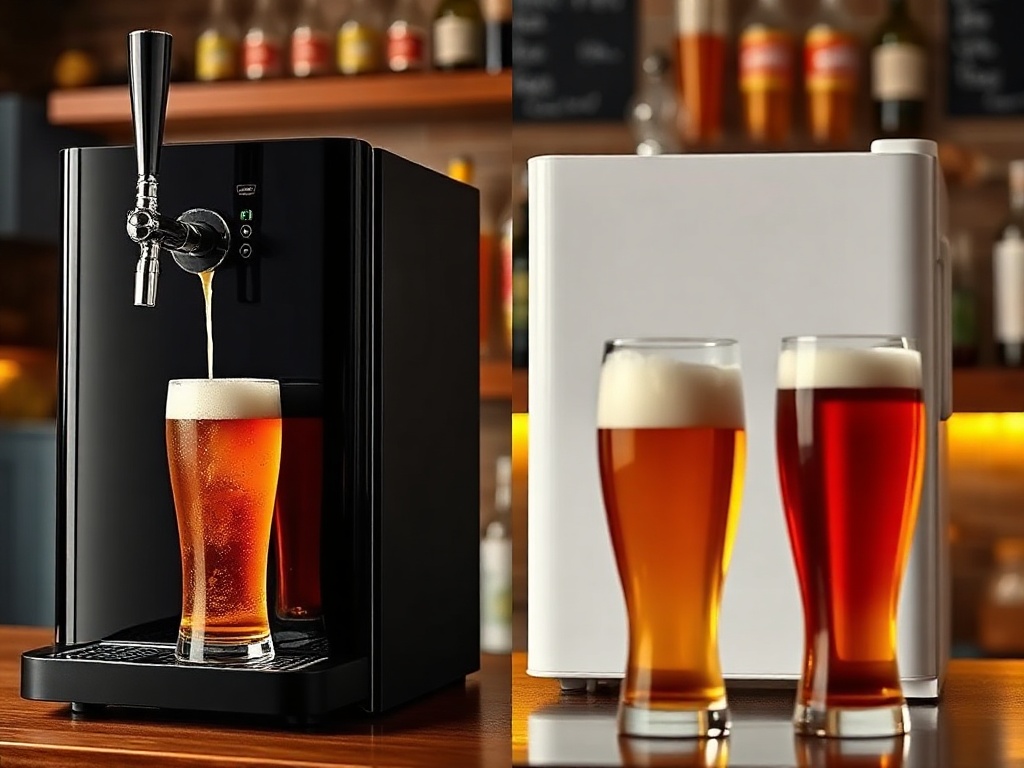
What a Kegerator Actually Does
A kegerator is a refrigerated cabinet designed specifically for kegs. It has three jobs:
- Keeps the keg cold. Not just cold — at a precise, stable temperature between 36–45°F.
- Pressurizes the keg with CO2. This keeps the beer carbonated and pushes it through the tap line.
- Delivers the beer through a tap. The draft tower connects to the CO2 system and the keg via beer lines.
The CO2 system is the part that matters most. Without it, you're not pouring draft beer — you're pouring flat beer from a tap.
Free guide
The Home Draft Beer Setup Guide
Everything you need to know about mini kegs, CO2 systems, and choosing the right equipment — delivered to your inbox.
What a Mini Fridge Actually Does
A mini fridge refrigerates. That's it. It has: no CO2 connection, no tap tower, no pressure system, no way to maintain carbonation.
You can put a mini keg inside a mini fridge and keep it cold. But when you want to pour it, you're either:
- Using a hand pump that pushes air in and makes the beer go flat after 24 hours
- Running the keg's built-in gravity tap, which gives you flat pours after day one
- Rigging up some DIY CO2 solution that's going to fail
None of these delivers what you'd get at a bar.
The Comparison That Matters
| Feature | Kegerator | Mini Fridge |
|---|---|---|
| Temperature control | Precise, stable | Fluctuates with door opens |
| CO2 pressurization | Yes — keeps beer carbonated | No |
| Draft tap | Yes — standard tower setup | No |
| Pour quality | Clean, carbonated, no foam | Flat or gushing foam |
| Freshness window | 3–4 weeks per tapped keg | 24–48 hours before flat |
| True cost | $59/month rental (TapDrop) | $100–200 to buy, plus DIY setup |
| Maintenance | CO2 cartridge swaps | Cleaning gravity taps yourself |
| Scalability | Multiple keg styles | One at a time, manual |
The mini fridge looks cheaper upfront. But when you factor in the hand pump you'll buy, the frustration of flat beer, and the fact that you'll probably upgrade in six months — the math shifts.
Why Temperature Precision Matters
Beer is sensitive. Every degree above 45°F changes how CO2 behaves in the liquid. At higher temperatures, CO2 wants to escape, which means:
- More foam when you pour (CO2 coming out of solution)
- Faster oxidation (oxygen degrading the beer faster)
- Loss of aromatic compounds that make craft beer interesting
A kegerator maintains 38–40°F consistently. A mini fridge cycles on and off, letting the temperature drift higher when the compressor is off. Every time the temperature spikes, your beer degrades a little. For a $18 6-pack of double IPA, that's real money.
The DIY Kegerator Option
Some people buy a mini fridge and convert it into a kegerator. You can — by adding a CO2 tank, regulator, beer lines, and a tap tower. The components cost $150–300, plus the fridge ($100–200), plus installation time.
The problems with DIY: CO2 tanks require refill and pressure management. Beer lines need cleaning to avoid bacterial buildup. Temperature calibration is manual and varies by fridge model. You're on the hook for repairs if something leaks.
The DIY approach makes sense if you have time, patience, and a local homebrew shop. For everyone else, a rental kegerator does all of this for $59/month — no setup, no maintenance calls.
ROI: The Math on Kegerator vs. Bar Tab
Kegerator cost (TapDrop full-size, $59/month): Monthly keg: ~$40–60 depending on brewery selection. Total: ~$100–120/month. You get 10–11 pints per 5-liter keg. Cost per pint: $4–6.
Drinking at a bar: Draft pint: $8–14 in most cities. 10 pints: $80–140. Plus transportation, tipping, time.
At $59/month for the equipment and $40–60 for the keg, you're drinking at home for roughly what you'd spend at a dive bar — except you get the pour you want, the style you want, and nobody else's jukebox.
Why TapDrop's Rental Model Wins
TapDrop offers two plans:
- Countertop tap system: $29/month — includes CO2 cartridge, tap, and drip tray. You add your own 5-liter mini keg. Good for casual users, apartments, small kitchens.
- Full-size kegerator: $59/month — built-in CO2 system, tower tap, holds standard 5-liter kegs. Good for weekly drinkers and anyone serious about home draft.
Both plans include delivery, setup support, and fresh kegs on your schedule. No buying equipment you'll never use again. No CO2 refill runs.
Compare that to spending $200+ on a mini fridge you'll eventually replace with a real kegerator, or $300+ on a DIY conversion you'll spend three weekends setting up.
Ready to experience great craft beer at home? TapDrop delivers 5-liter mini kegs from top breweries to your door, anywhere in the US.
Take the TapDrop quiz to find your plan →When a Mini Fridge Makes Sense
Full disclosure: a mini fridge is fine in one scenario. You're using it purely for cold storage — not for serving draft beer. You buy mini kegs, store them cold, and pour them using the keg's built-in tap or a gravity pour for a single party. You don't care that it's flat after day one.
If that sounds like you, buy the $100 mini fridge. But don't expect bar-quality pours. And don't blame the beer when it tastes flat — it's the equipment.
More from TapDrop
Ready to experience great craft beer at home? TapDrop delivers 5-liter mini kegs from top breweries to your door, anywhere in the US.
Browse Mini Kegs →